2025: The Year I Learned That Building a Product Was the Easy Part
I used to think the hardest part of building a company was the technical work. The database schemas. The API integrations. The late nights debugging code.
I was wrong, again.
2025 taught me that I could build something beautiful and still have nobody notice. That code doesn't speak for itself. That clarity in a dashboard means nothing if I can't create clarity in a conversation.
This is a reflection of what I learned, what we built, and who I'm becoming.
The Pivot That Changed Everything
When I launched Nimbus Portfolio, I had a specific customer in mind: the landlord with a growing rental portfolio. Solid target. Real pain. Clear problem.
But something kept nagging at me.
The family who moved and kept their old house as a rental. The new homeowner wondering how they can afford that kitchen remodel. The entrepreneur who bought a fourplex, then a strip mall, then a short-term rental.
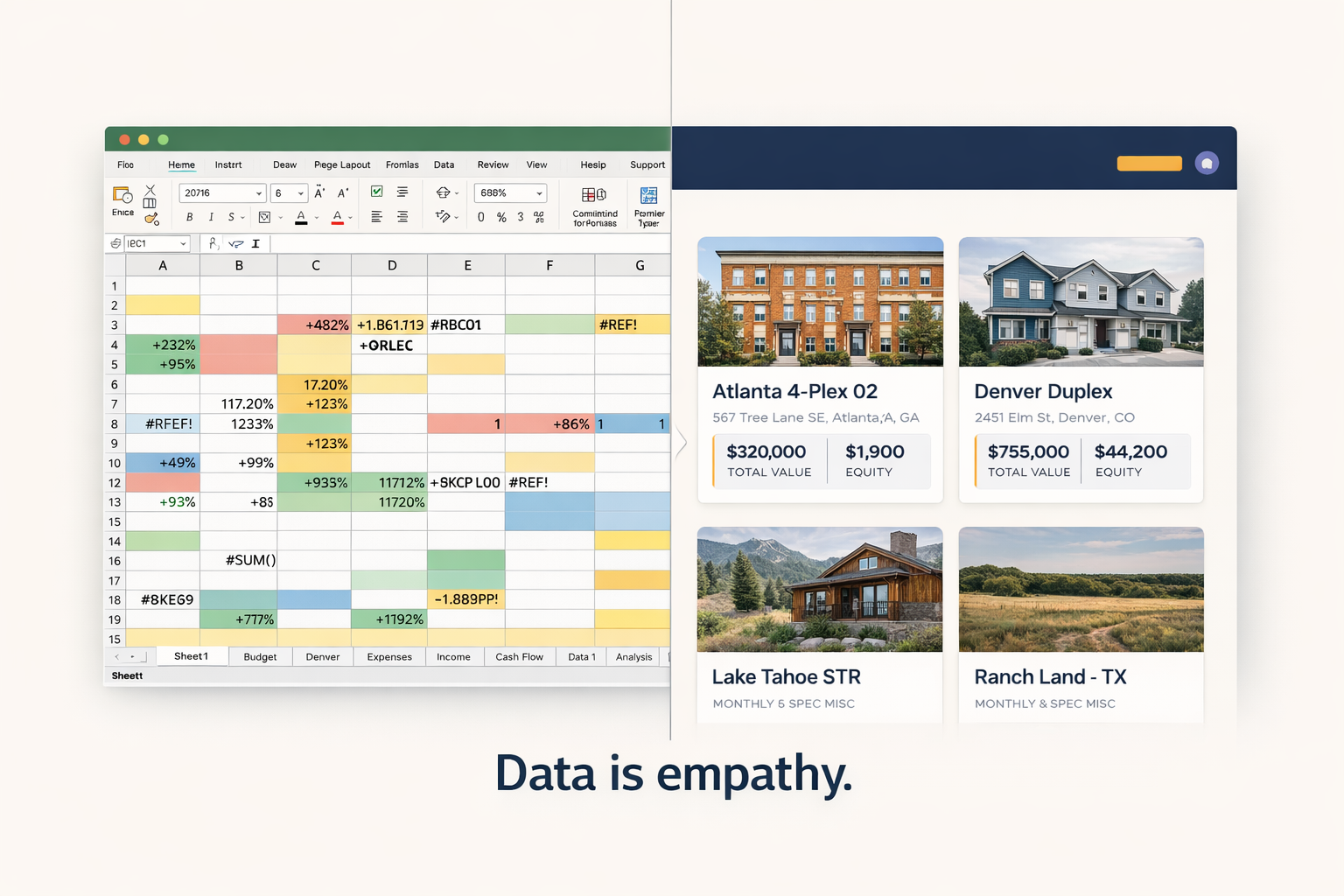
These people exist. They have the same chaos I had — spreadsheets failing them, platforms that assume they are seasoned investors, no unified view of everything they own. But they aren't "landlords" in the traditional sense. They're something else.
They're homeowners trying to make smart decisions. First-timers figuring it out. Families building something for the next generation.
So we pivoted. Not away from landlords, but toward a bigger truth: if it has an address tied to it, you should be able to track it in one place.
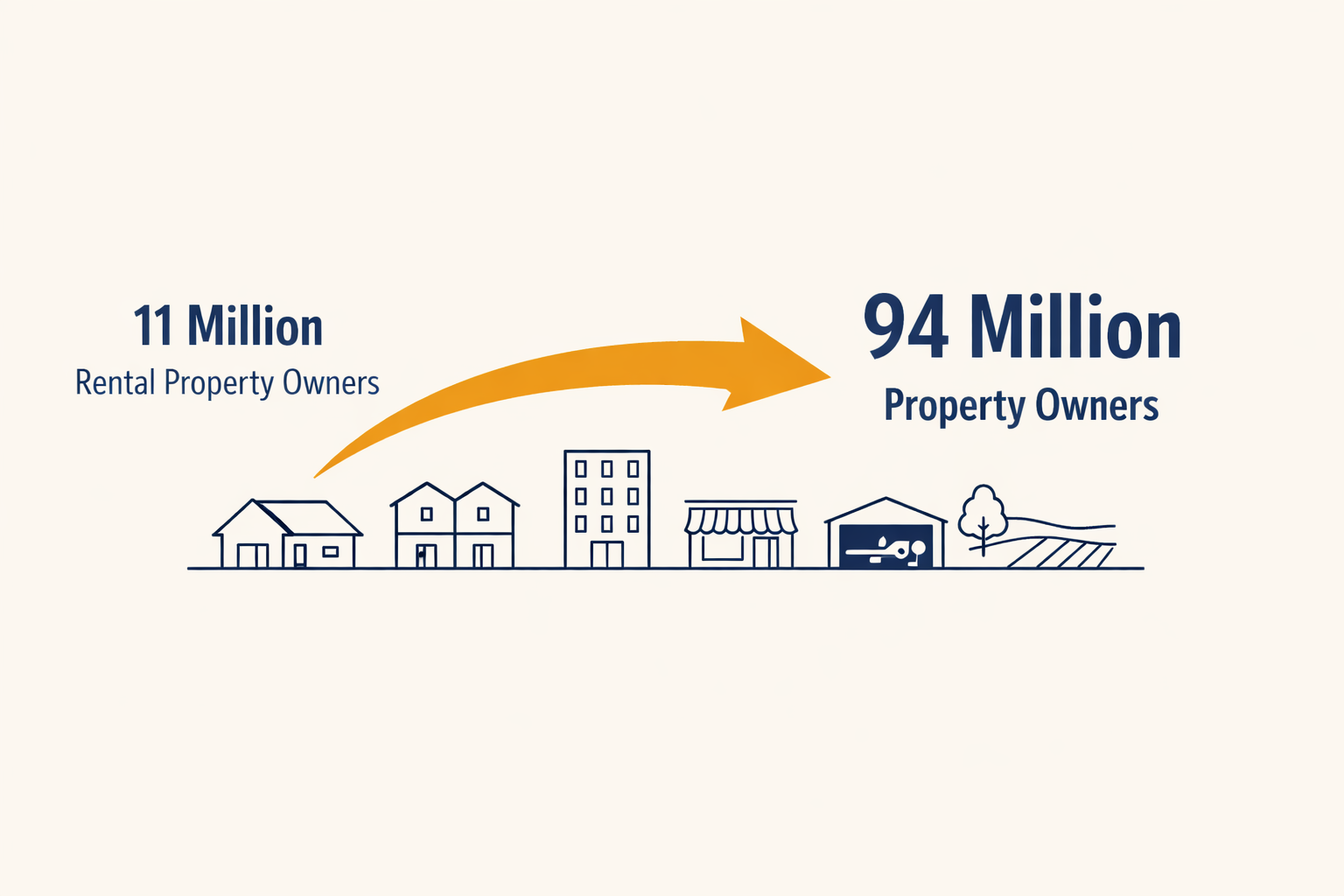
This wasn't a small change. It meant rethinking our messaging, our positioning, our entire reason for existing. It was terrifying. It was necessary.
And it felt like actually supporting the people I interact with on a daily basis.
The Lesson I Didn't Want to Learn
Here's what they don't tell you when you're knee-deep in code: the product is not the business.
I spent months perfecting Nimbus. Dozens of interlocking database tables. Market intelligence from the Federal Reserve, Census Bureau, and Zillow. Tools that help you see what happens if you refinance, sell, or hold — before you commit.
It was elegant. It was powerful. It was invisible.
Because I hadn't learned to tell the story.
I could explain the architecture to another engineer in beautiful detail. But when someone asked, "What does Nimbus do?" I would fumble. I would overexplain. I would lead with features instead of problems we solve.
2025 was the year I had to become a storyteller.
Not the kind who performs or entertains — the kind who helps people see themselves in a future they didn't know was possible. The kind who turns technical capability into human transformation.
I'm still learning. But I've stopped fighting it. The transition from engineer to founder isn't just about adding skills — it's about letting go of the identity that says "I speak in code, not emotions."
Data is empathy. Numbers are narratives. Clarity is kindness.
I had to learn to believe that before I could say it out loud.
The Solopreneur Paradox
Building alone is both blessing and curse.
The blessing: every decision is mine. No politics. No waiting for approval. No explaining my vision to people who don't share it. When I see a problem at 10 PM, I can fix it by midnight. When inspiration strikes, I can ship it by morning.
The curse: every decision is mine. Every setback lands squarely on my shoulders. Every victory has no one to high-five. When doubt creeps in — and it does, daily — there's no partner to remind me why we started.

I've learned to find community in unexpected places. In the people who sign up and tell me their story. In the other founders who share their struggles publicly. In family and mentors who are building — businesses, careers, full lives. In my wife Lauren, who sees me wrestling with this thing and still believes in it — and in me.
The solopreneur journey isn't about doing everything alone. It's about building the architecture of support that keeps you moving when the motivation disappears.
Because motivation will disappear. Discipline and consistency are what remain.
What 2025 Taught Me
1. Sales and marketing aren't "non-technical" work — they're a different kind of engineering.
I used to dismiss marketing as noise. Now I see it as precision engineering. The challenge isn't broadcasting louder; it's resonating deeper. Understanding why someone trusts you enough to enter their email is as technical as understanding why a query returns in 50 milliseconds.
2. Retention problems are education problems.
We had users sign up and never return. I thought it was the product. It wasn't. They didn't understand what they were looking at. They needed guidance, not more features. The fix wasn't better code — it was better communication.
3. Simplicity is harder than complexity.
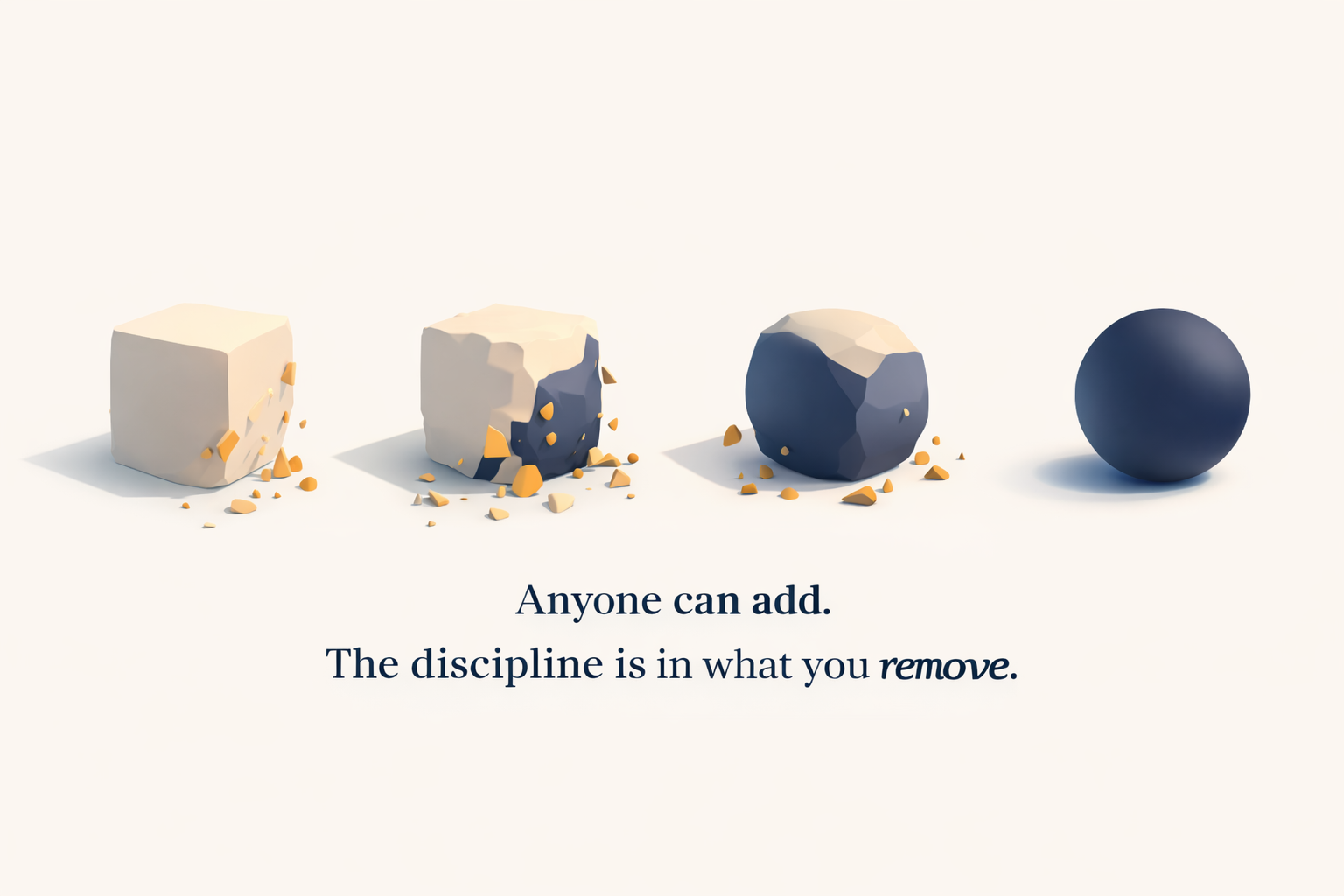
Anyone can add, especially with AI. The discipline is in what you remove. Michelangelo said he simply carved away everything that wasn't David. That's product design. That's messaging. That's life, honestly.
4. The company is the vehicle; the transformation is the destination.
I had a realization this year that shook me. I'd been building Nimbus like the outcome was the company — the revenue, the subscribers, the exit. But the real outcome is who I'm becoming through the building.
Every challenge, every setback, every blank stare when I explain what I do — it's all shaping me into someone capable of handling what comes next.
The journey isn't leading somewhere. The journey is the somewhere.
What's Coming in 2026
We're just getting started.
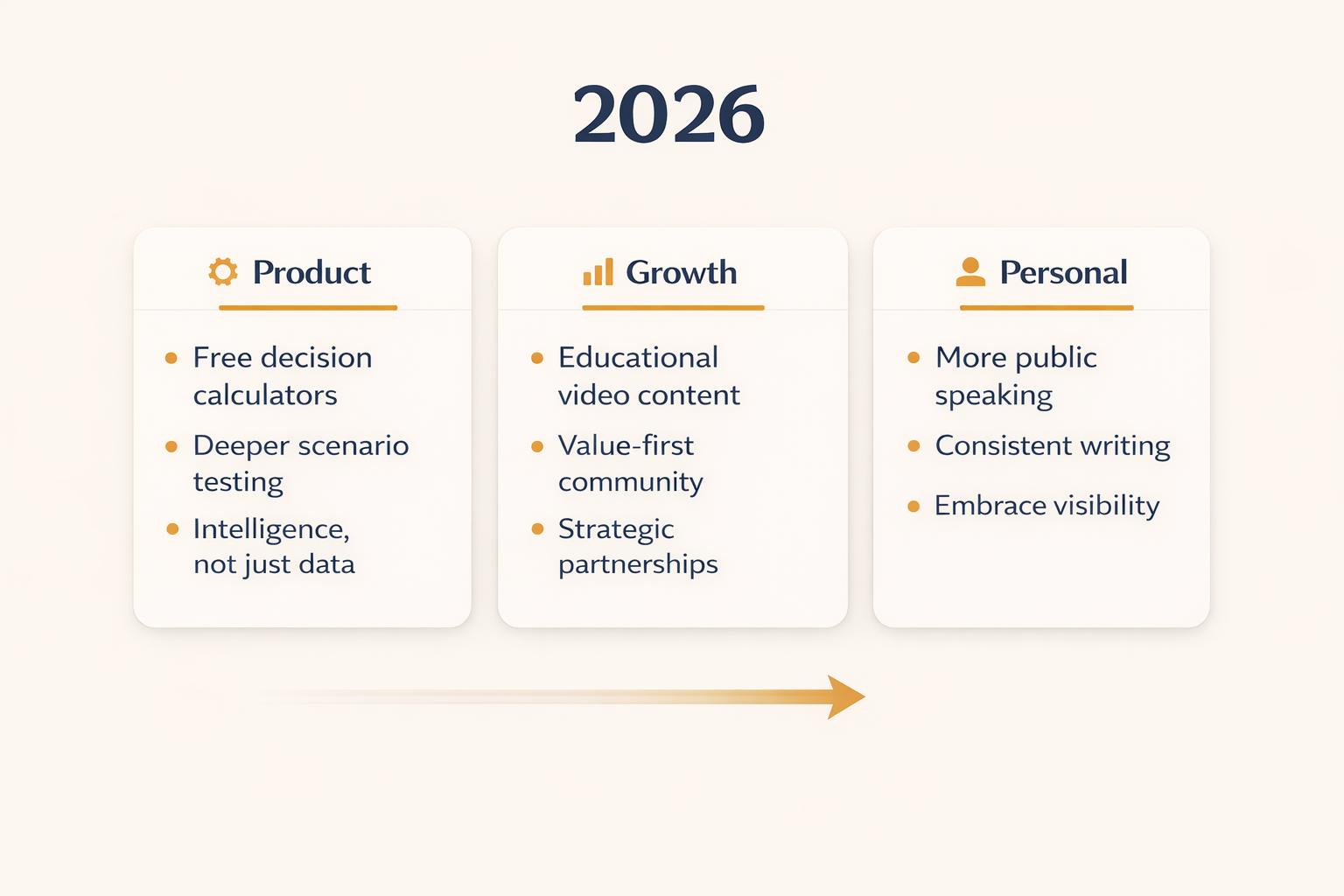
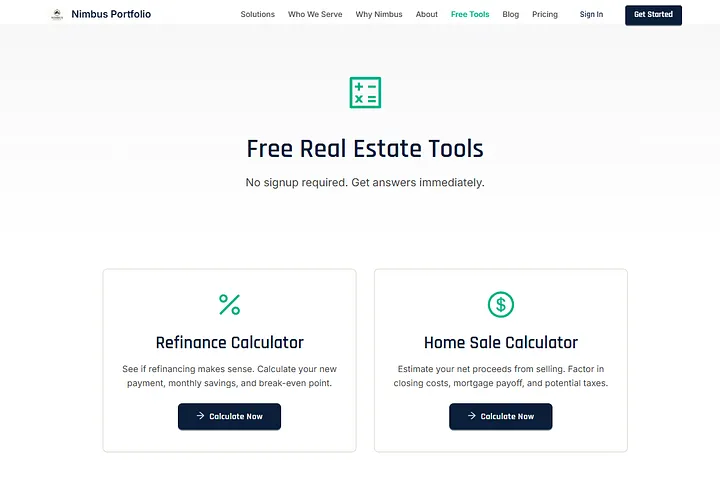
On the product side: free calculators to help property owners make smarter decisions, deeper scenario testing, and solutions that don't just show you data — they tell you what it means.
On the growth side: video content that teaches and doesn't just promote. Community engagement that leads with value. Partnerships with people who share our belief that clarity changes lives.
On the personal side: more speaking. More writing. More stepping into the discomfort of being visible.
I've learned that no one is coming to save you. So you build. You keep showing up. You trust that the work compounds even when you can't see it.
To Anyone Building Something
If you're in the early days:
The doubt is normal. The imposter syndrome is normal. The feeling that everyone else has it figured out while you're making it up as you go — that's universal.
But you're not building a product or service or career. You're building yourself.
Every late night teaches you discipline. Every rejection teaches you resilience. Every moment of clarity — the ones where you see exactly why this matters — those are the fuel that keeps you moving.
The metrics will come. The revenue will come. But only if you become the person capable of holding it.
Learning to love the process. Learning to share my story. And learning to endure.
Thank you for being part of the journey.
Nimbus Portfolio helps property owners understand if their real estate is building wealth. One platform. Every property. Clarity over clutter.
Try the free calculators → No signup required.